 Загрузка ...
Painting walls with your own hands: surface preparation, paint selection and work procedure
Painting walls is one of the most popular ways to update an interior: it allows you to quickly change the color, highlight the texture, and visually clean up the room.
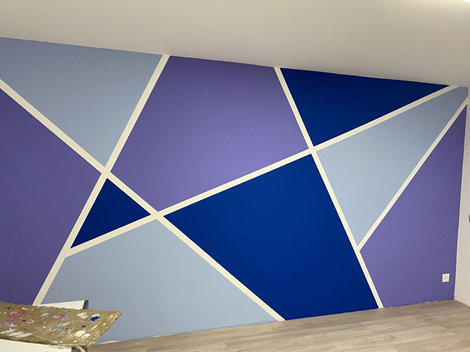
To achieve a professional-looking result https://asapreno.ca/, it’s important to follow the correct process: from preparing the surface to properly applying layers and drying conditions.
The quality of a paint job depends 70% on preparation: even expensive paint won’t hide cracks, dust, grease stains, and fragile old coatings. Below are clear rules to help avoid streaks, stains, blisters, and peeling.
Substrate Assessment: Moisture, Strength, Surface Type
Before painting a wall, it’s important to assess the substrate: its condition affects adhesion, paint coverage, color uniformity, and coating durability.
Checking the moisture, strength, and surface type helps you choose the right primer, preparatory materials, and application method in advance, as well as avoid peeling, stains, and cracks.
What and How to Check Before Painting
The substrate’s moisture content must meet the requirements of the selected paint and primer. Damp walls reduce adhesion and promote bubbling, efflorescence, and mold.
- Testing with a device: a plaster/concrete moisture meter (most reliable).
- Quick check: apply a film (approximately 50×50 cm) to the wall for 12-24 hours; condensation under the film or darkening of the base indicates excess moisture.
- Damp areas (corners, slopes, areas near pipes) require eliminating the cause of moisture before any finishing work.
Strength and load-bearing capacity – the base must be solid, not crumbling, and not dusty. Paint does not strengthen weak layers and will reproduce their defects.
- Run your hand over the wall: if heavy dust remains, a strengthening primer or removal of the weak layer is required.
- Tap the wall: a dull sound indicates peeling plaster.
- Try the tape test: apply masking tape and quickly tear it off; if chalk, putty, or old paint comes off, the surface needs to be cleaned and re-prepared.
The surface type determines the choice of primer and preparation. Different materials absorb moisture and interact with paint differently.
- Mineral surfaces (concrete, cement/gypsum plaster, putty): it is important to equalize the absorbency and remove dust; Deep penetration primers are most often used.
- Old paint: determine the type (water-based/alkyd), durability, and compatibility; matte the gloss, and remove weak layers.
- Wood and wood-based panels: resin/tannin barriers and sanding are required; select a suitable primer for the wood.
- Metal: rust removal, degreasing, and an anti-corrosion primer are essential.
Bottom line: a quality paint job depends not on the number of paint coats, but on a proper assessment of the substrate. A dry, durable, and properly identified surface with a suitable primer ensures an even color, economical consumption, and a long-lasting finish without peeling or staining.