 Загрузка ...
How to Choose a Condensate Pump for Home HVAC Equipment
Choosing a condensate pump for home HVAC equipment starts with the installation conditions, not with the pump’s appearance.
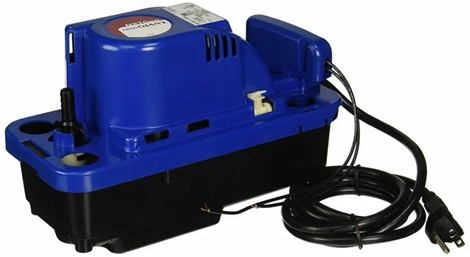
The correct choice has to move the expected water volume through the actual discharge route while fitting the available space and remaining serviceable. A pump that is too small, too difficult to reach, or poorly matched to the route can create nuisance cycling, overflow risk, and inconvenient maintenance. Begin by collecting site details so every product comparison is based on the same practical requirements.
First identify the source of the water. A central air handler, furnace, heat pump, dehumidifier, or other appliance may drain in a different location and on a different schedule. Note whether the pump will serve one unit or receive water from more than one source. The answer affects reservoir needs, connection planning, and the importance of clear labeling. When several appliances share a drainage arrangement, the system should be planned as a whole rather than treated as several unrelated pieces of tubing.
Next, measure the route the water must travel. Record the vertical distance to the highest point of the discharge line, the horizontal distance after that lift, and the number of turns. The vertical rise is especially important because it describes the work the pump must perform. Horizontal distance and fittings can add resistance as well, particularly when a route is long or crowded. A written sketch with dimensions gives an installer or supplier a much better starting point than an estimate based on the room alone.
Available space determines the form factor that will be practical. Some installations need a compact solution close to the appliance, while others can accommodate a larger reservoir in a utility area. Do not measure only the empty footprint. Include room for the inlet, discharge tubing, power connection, covers, cleaning, and a hand or tool reaching the components. A pump hidden perfectly behind equipment may look tidy on the first day but become a costly inconvenience when routine inspection is needed.
Noise deserves its own evaluation in bedrooms, offices, finished basements, and open living areas. Pump sound is affected by placement, vibration transfer, pumping frequency, the surrounding structure, and the condition of the discharge line. Rather than relying only on a single sound rating, consider the entire installation. A unit mounted against a resonant surface or connected to unsupported tubing may be more noticeable than expected. Ask how the pump will be isolated, supported, and accessed after installation.
Safety and maintenance features should be understood before purchase. Depending on the equipment and model, an installation may use an alarm, a safety switch, a test function, filtration, or a removable component for cleaning. These features are useful only when they are installed and maintained according to the documentation. Homeowners should know which items require periodic inspection, what a warning indicator means, and who will service the system if it does not drain normally. Clear responsibility avoids ignored warning signs later.
A product comparison can begin with the current range from Cleartide, then move to the details that matter at the site: source equipment, required lift, drainage route, available clearance, service access, and noise sensitivity. This keeps the discussion focused on application fit instead of marketing language. Confirm the exact model documentation, compatible accessories, and installation steps before making a final selection.
The best selection process produces a short written specification for the home. It should list the appliance being drained, route dimensions, desired mounting area, maintenance access, and any overflow-protection expectation. With that information, a homeowner, contractor, or facilities contact can compare suitable options on a consistent basis. That small amount of preparation can reduce installation changes, prevent unnecessary return visits, and help ensure that condensate drainage remains a background function rather than a recurring household concern.