22.10.2026
Проекты домов из клееного бруса
 Загрузка ...
Car Ignition System Repair: Procedures and Safety Requirements
29.09.2026
Общая информация
The ignition system directly affects engine starting, idle stability, and fuel consumption, so its diagnostics and repair require strict requirements.
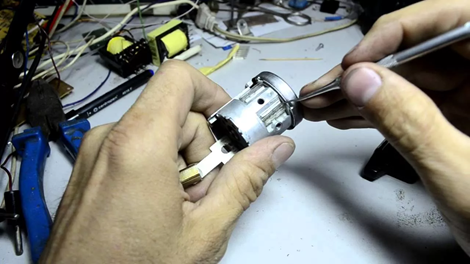
In this article, we’ll discuss key component inspection rules, typical signs of malfunction, and the procedure to ensure repair ignition Cambridge is performed safely and with predictable results.
It’s important to adhere to the manufacturer’s tolerances and tightening torques, use a properly functioning measuring tool, and disconnect the power before working on high-voltage circuits. Particular attention should be paid to the condition of spark plugs, coils, wiring, connectors, and sensors, as even minor contact issues can lead to misfires and damage to electronic components.
Regulatory restrictions and general requirements for working on the spark system
A key restriction is the prohibition on the use of non-certified components and solutions not intended for a specific engine modification. Coils, spark plugs, high-voltage wires, terminals, control modules, and any «spark amplifiers» must meet specifications for resistance, thermal range, breakdown voltage, and connector type; otherwise, the risk of misfires, coil overheating, ECU damage, and electrical system interference increases.
What should be checked before starting work
- Technical documentation (diagrams, tightening torques, diagnostic procedure) and acceptable equivalent parts.
- The presence of errors and the conditions under which they occur: diagnostic codes, misfire parameters, supply voltage and grounds.
- Twisting and workarounds are prohibited: harness repairs are performed using standard methods (crimping/soldering according to technology, sealing, heat shrinking), without degrading the insulation and shielding.
Safety Requirements for Diagnostics and Repair
The ignition system operates with high voltage, so the main requirement is to avoid contact with the high-voltage part while the engine is running and when attempting to start it. Before removing ignition components, disconnect the power supply in accordance with the manufacturer’s instructions. At a minimum, turn off the ignition, wait for the electronic units to enter sleep mode, and when working on coil/ECU connectors, disconnect the negative battery terminal (if permitted by the vehicle’s regulations) to prevent accidental starting.
During work, avoid fire hazards: sparks and fuel vapors are incompatible. Spark diagnostics should only be performed using standard testers/adapters. Do not visually ground the removed spark plug or create an open spark gap near the fuel rail, ventilation hoses, or potential leaks. If fuel odor, wet traces, or damage to the fuel lines are detected, discontinue any spark testing until the leak is repaired.
- Cooling and Thermal Safety: Work on the cylinder head, catalytic converter, and exhaust manifold should be performed after cooling to prevent burns and damage to spark plug well threads.
- Electronic Protection: Avoid reverse polarity, short circuits, and testing ignition circuits with unsuitable devices; use diagnostic equipment designed for automotive electronics.
- Correct Installation: Maintain proper spark plug and coil tightening torque, seal condition, and dielectric grease (if applicable) to avoid breakdown, moisture absorption, and insulation damage.
- Post-Repair Inspection: Check for misfires, stable idle speed, and errors, and ensure connectors and harnesses are properly secured away from hot/moving parts.
Советуем прочитать
Оставить комментарий